

Automotive-grade silicon carbide (SiC) four-pin power transistor
In the realm of high-end audio amplifiers, power transistors serve as core components that directly determine efficiency, sound quality, and long-term reliability. Sinbosen has comprehensively upgraded its D and SR series amplifiers; the entire lineup now features automotive-grade, four-pin Silicon Carbide (SiC) power transistors, delivering an unprecedented listening experience for audiophiles by meeting the rigorous standards of automotive electronics.
What is an automotive-grade, four-pin silicon carbide (SiC) power transistor?
Automotive-Grade Standards: Rigorous Assurance via AEC-Q101 Certification
The silicon carbide power transistors used in Sinbose’s D-series and SR-series products have all passed AEC-Q101 automotive-grade reliability certification. Established by the Automotive Electronics Council (AEC), AEC-Q101 is a globally recognized standard and a mandatory prerequisite for automotive discrete semiconductor components to enter the automotive supply chain. This certification encompasses dozens of rigorous tests—such as High-Temperature Reverse Bias (HTRB), High-Temperature High-Humidity Reverse Bias (H3TRB), Temperature Cycling (TC), and High-Temperature Gate Bias (HTGB)—designed to simulate the long-term reliability of components under extreme automotive operating conditions.
Power transistors that have passed AEC-Q101 certification offer:
A wider operating temperature range: Typically supporting extreme temperature cycling from -55°C to +175°C;
Superior long-term reliability: Passing over 1,000 hours of high-temperature, high-voltage stress testing;
Stricter batch consistency: Meeting PPAP (Production Part Approval Process) quality control requirements;
Enhanced interference resistance: Maintaining stable operation in harsh electromagnetic environments.
By incorporating automotive-grade components—originally designed for applications like electric vehicle powertrains and On-Board Chargers (OBCs)—into audio power amplifiers, Sinbose employs an "over-engineered" design philosophy. This ensures the amplifiers deliver stable, pristine sound quality regardless of the operating environment.
Silicon Carbide (SiC) Material: Inherent Advantages of Third-Generation Semiconductors
Compared to traditional silicon-based MOSFETs and IGBTs, silicon carbide—a third-generation wide-bandgap semiconductor material—offers the following key advantages:
Lower on-resistance (RDS(on)): For a given chip area, the on-resistance of SiC MOSFETs is merely 1/100 to 1/300 that of silicon devices, significantly reducing conduction losses;
Faster switching speeds: SiC devices achieve nanosecond-level switching times and support higher PWM modulation frequencies, allowing for greater flexibility in the design of Class-D amplifier output filters and resulting in purer sound quality;
Superior high-temperature performance: SiC devices exhibit minimal on-resistance drift at high temperatures, ensuring that amplifier performance does not degrade during prolonged, high-power operation;
Lower reverse recovery charge (Qrr): Reverse recovery in the body diode is virtually zero, drastically reducing switching losses and ringing.
4-Pin Package (TO-247-4): A Revolutionary Design Featuring Kelvin Source Technology
The automotive-grade silicon carbide (SiC) power devices selected by Sinbose utilize the TO-247-4 four-pin package. Compared to the traditional TO-247-3 three-pin package, the key innovation lies in the introduction of a Kelvin Source pin.
TO-247-3 (3-pin) Pin Definitions:
Pin 1: Gate (G)
Pin 2: Drain (D)
Pin 3: Source (S) — Shared by both the power loop and the gate drive loop
TO-247-4 (4-pin) Pin Definitions:
Pin 1: Drain (D)
Pin 2: Power Source — Carries the main power current
Pin 3: Kelvin Source — Provides an independent reference ground specifically for the gate drive loop
Pin 4: Gate (G)
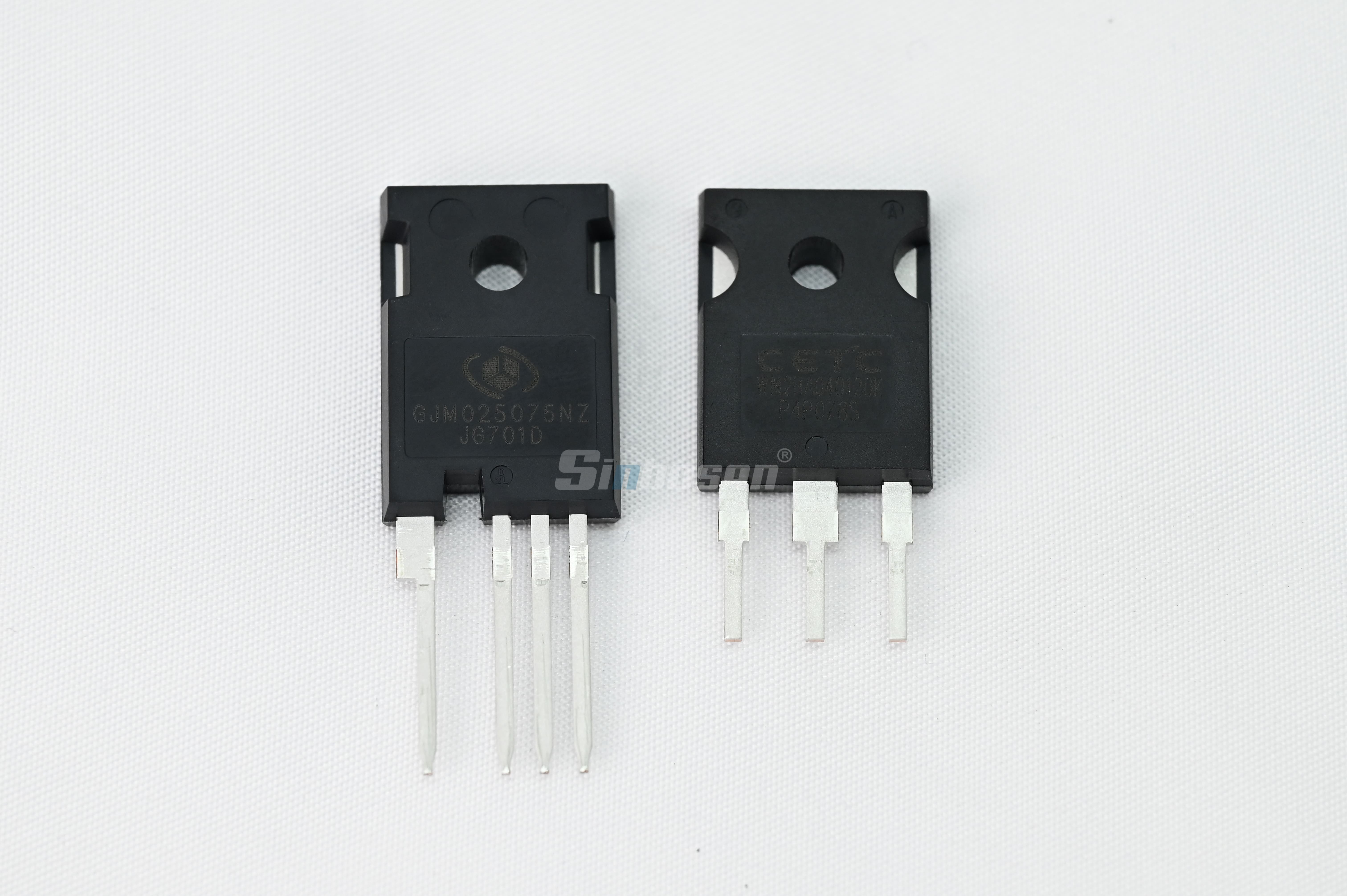
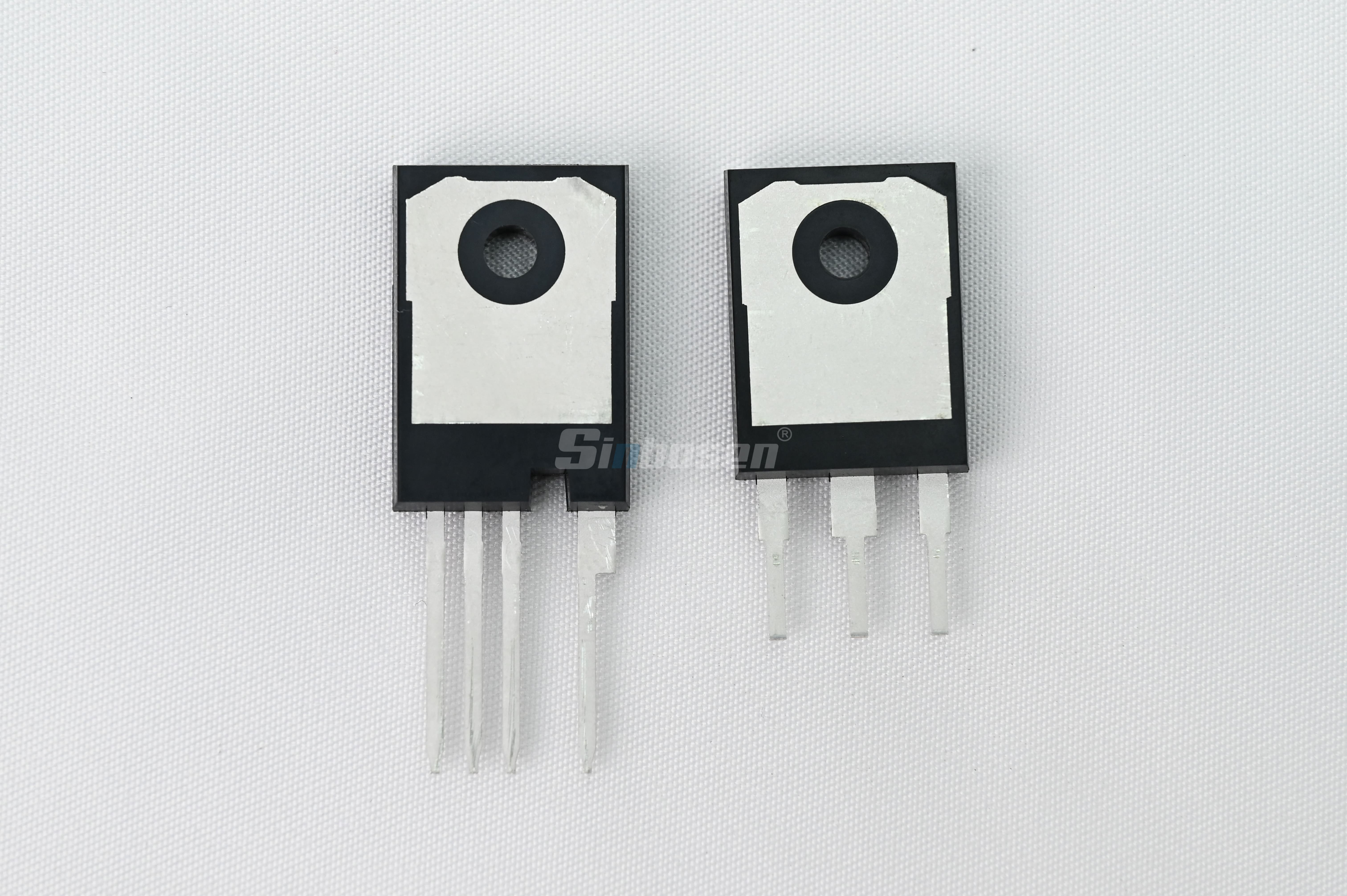
The Difference Between Three-Pin and Four-Pin Power Transistors
Traditional power amplifiers typically utilize power transistors in the TO-247-3 (three-pin) package, featuring Gate (G), Drain (D), and Source (S) terminals. In contrast, the TO-247-4 (four-pin) package adopted by Sinbose adds an independent Kelvin Source pin to the standard configuration. The key differences between the two are as follows:
Comparison Parameter | Three-Pin Power Transistor (TO-247-3) | Four-Pin Power Transistor (TO-247-4) | |||||
Pin Configuration | Gate, Drain, Source (3-pin) | Gate, Drain, Power Source, Kelvin Source (4-pin) | |||||
Circuit Design | Drive circuit and power main circuit share the source pin | Drive circuit and power main circuit are physically separated | |||||
Parasitic Inductance Impact | Common Source Inductance (CSL) generates negative feedback, weakening the drive voltage | Kelvin Source eliminates Common Source Inductance interference | |||||
Switching Speed | Limited by source inductance, resulting in larger switching delays | Gate voltage remains unattenuated, enabling faster switching speed | |||||
Switching Loss | Higher turn-on / turn-off losses | Turn-on loss reduced by ~71%, turn-off loss reduced by ~28% | |||||
Gate Ringing | Prone to voltage oscillation and false triggering under high di/dt conditions | Ringing amplitude significantly reduced; anti-interference capability improved by ~30% | |||||
EMI Performance | Higher electromagnetic interference in the MHz band | Stricter control of gate voltage reduces oscillation and EMI | |||||
Key Advantages of 4-Pin Power Transistors
1. Significant Reduction in Switching Losses and Enhanced System Efficiency
The 4-pin package utilizes an independent Kelvin source connection, completely eliminating the interference of power current on the gate drive loop—a common issue in traditional 3-pin packages. Measured data shows that, using the same chip, the TO-247-4 package achieves a 71% reduction in turn-on loss, a 28% reduction in turn-off loss, and an overall power loss reduction of approximately 18%. In power amplifier applications, this translates to less energy waste, reduced heat generation, and higher electrical energy conversion efficiency.
2. Decoupling of Drive and Power Loops, Fully Unleashing Switching Speed
In 3-pin packages, rapid changes in drain current (ID) induce a voltage (V = L × di/dt) across the parasitic inductance of the power source. This voltage superimposes onto the gate drive loop, creating a negative feedback effect that effectively lowers the voltage actually applied across the chip's gate and source terminals, thereby slowing down switching speeds. The 4-pin package employs physical isolation, allowing the gate driver to switch at the device's intrinsic speed and fully unlocking the high-speed performance potential of the Silicon Carbide (SiC) chip.
3. Suppression of Gate Oscillations, Improving System Stability and Reliability
Under high di/dt conditions, the source inductance in 3-pin packages generates significant voltage oscillations. This causes the gate voltage to fluctuate (dropping or spiking), leading to false turn-on events or turn-off delays. With the 4-pin package, the Kelvin source connects directly to the chip's internal source contact area; this reduces the Vgs ringing amplitude from 12.3V to 3.1V and lowers the probability of false triggering by 92%. For professional power amplifiers, this ensures stable operation even under the impact of high-dynamic-range signals, preventing distortion or component damage.
4. Reduced EMI and Simplified System Design
The 4-pin package’s tighter control over gate voltage effectively suppresses oscillations during switching, thereby reducing electromagnetic interference (EMI) in the MHz frequency range. This allows Sinbose D-series and SR-series amplifiers to meet stringent electromagnetic compatibility (EMC) standards while simplifying filter circuit design and reducing the overall cost and size of the unit.
5. Automotive-grade standards ensuring quality
The silicon carbide (SiC) four-pin power transistors selected by Sinbose comply with AEC-Q101 automotive-grade standards and have undergone rigorous reliability testing for automotive electronics. This ensures stable operation under harsh conditions—such as high temperatures, high humidity, and high power loads—thereby providing a solid guarantee for the long-term reliability of the amplifier products.
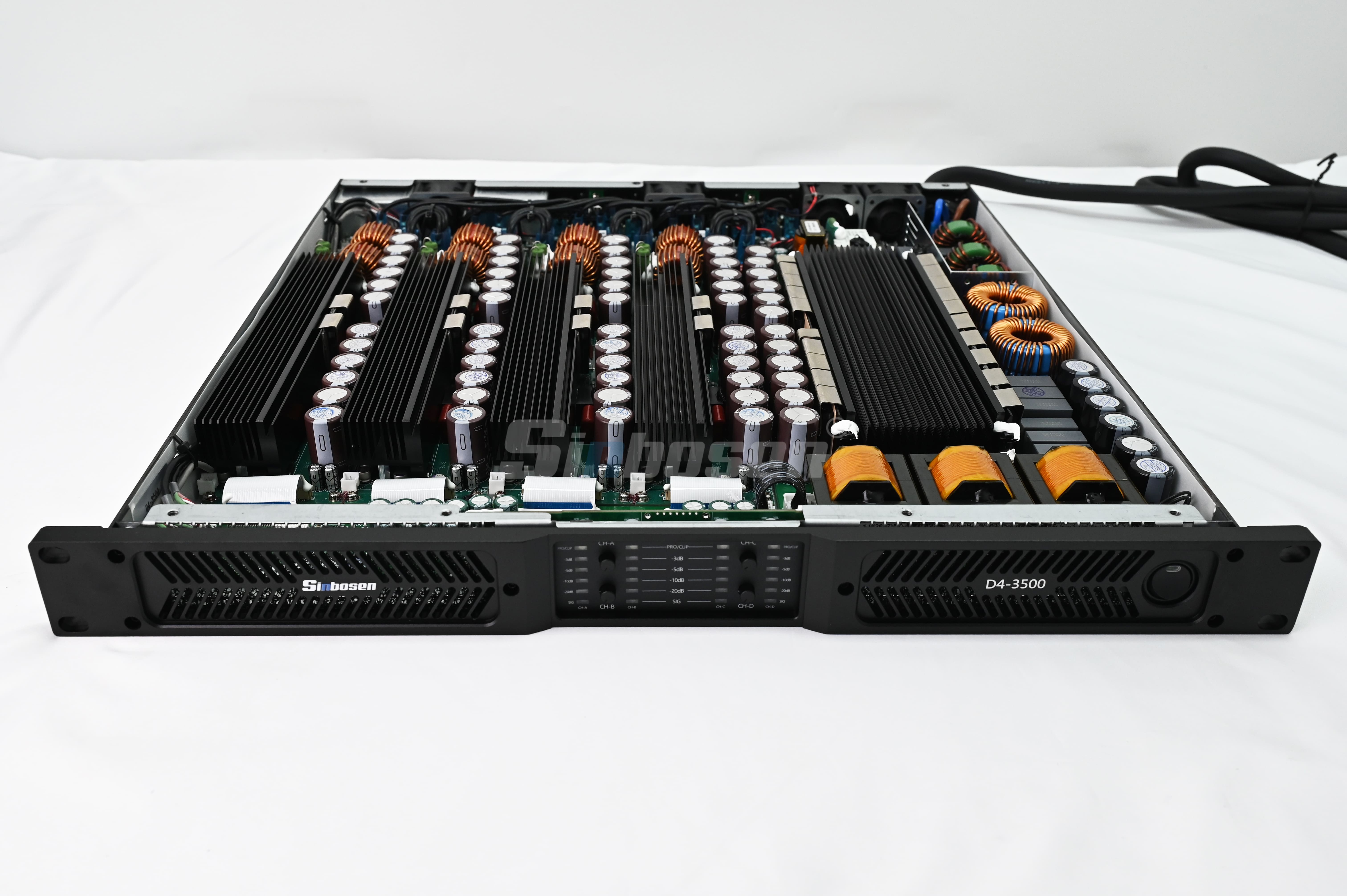
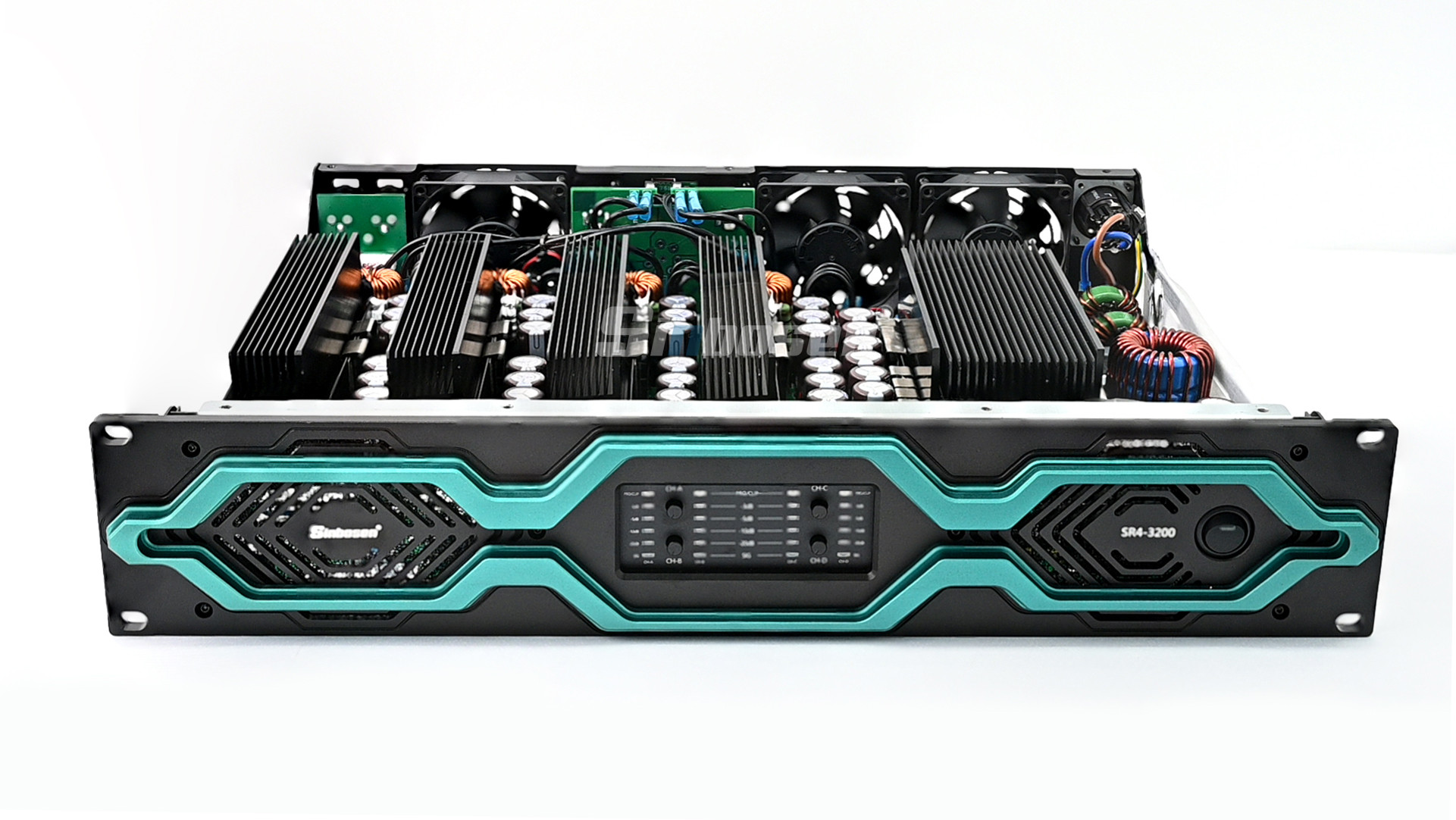
Equipped with automotive-grade silicon carbide (SiC) four-pin power transistors, Sinbose’s D and SR series amplifiers deliver exceptional performance in real-world applications. The D series amplifiers operate stably and continuously at low impedances (2Ω); notably, the D4-3000 model boasts an output power of 3000W × 4 channels (at 8Ω) and 6500W × 4 channels (at 2Ω). The SR series focuses on ultra-quiet operation, featuring a signal-to-noise ratio exceeding 110dB and total harmonic distortion below 0.5%, while also maintaining stable 2Ω driving capabilities—with the SR4-3200 delivering a robust 4 × 6000W RMS output at 2Ω.
User feedback indicates that the D series amplifiers excel in diverse settings—such as wedding parties, live band performances, and outdoor stages—earning widespread acclaim from customers worldwide.